01
Initial Examination
The dentist assesses your teeth, gums, medical history, and bone support to establish a suitable treatment plan.
Missing teeth can affect chewing, speech, confidence, and your overall oral health. Dental implants are designed to replace missing tooth roots and provide support for a replacement tooth.
At Dr. Bansal’s Dental Clinic, the implant process begins with an individual assessment of your teeth, gums, bone support, and treatment goals. Your dentist will explain the suitable options and the stages involved in your treatment.
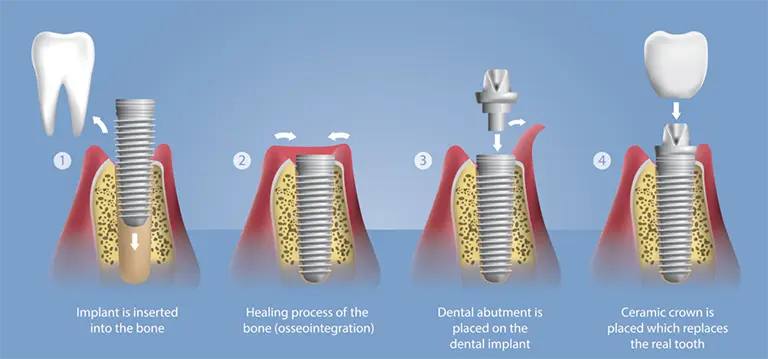
Illustrative representation of a dental implant restoration.
Your dentist first evaluates your oral health to determine whether dental implants may be an appropriate option. This stage helps identify factors that can influence the procedure and healing process.
If gum disease, insufficient bone, or another oral health concern is present, it may need to be addressed before implant placement.
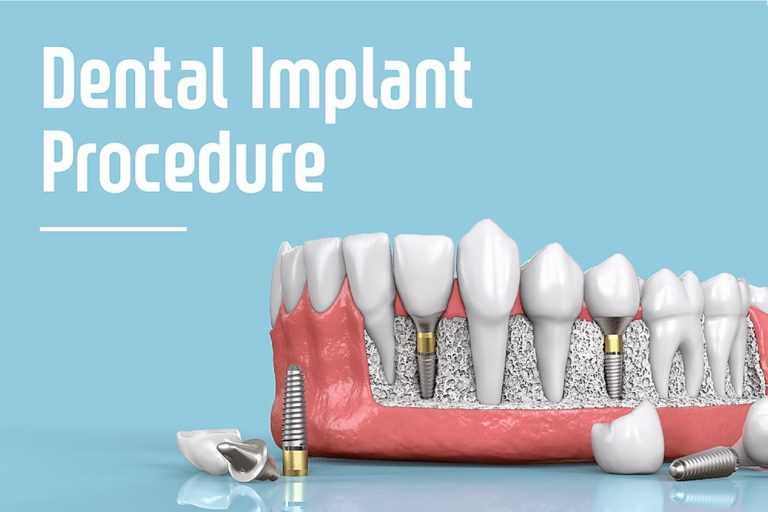
Treatment planning is personalised according to the patient's oral health and clinical findings.
Dental implant treatment usually takes place in stages. The exact sequence and duration vary depending on the patient's needs, bone condition, and whether additional procedures are necessary.
The dentist assesses your teeth, gums, medical history, and bone support to establish a suitable treatment plan.
Existing gum disease or other oral health concerns may need treatment before the implant procedure can begin.
A dental implant is placed in the jawbone using an appropriate surgical technique and anaesthesia plan.
The implant is given time to integrate with the surrounding bone. The duration depends on individual healing and stability.
When clinically appropriate, a connecting component and custom-made replacement tooth are fitted.
Follow-up visits help assess healing, the condition of the restoration, and your ongoing oral hygiene.
During implant placement, the dentist positions the implant in the planned area of the jawbone. The procedure is carried out using an appropriate anaesthesia plan determined by the treating clinician.
The technique depends on the location of the missing tooth, the available bone, the type of implant, and the overall treatment plan.
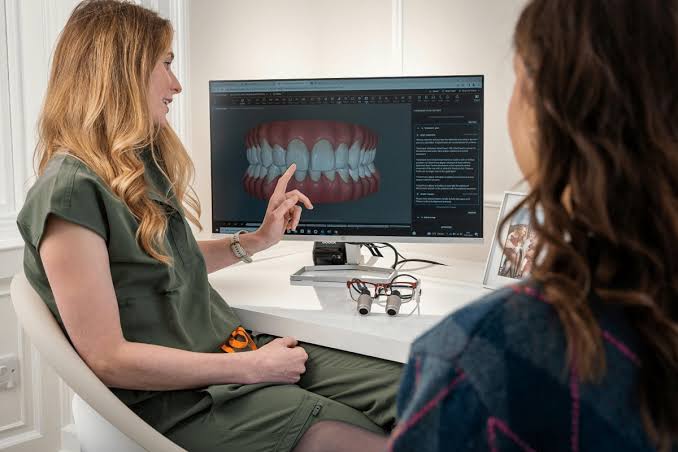
Implant placement is planned according to the patient's anatomy and restorative requirements.
After placement, the implant needs time to integrate with the surrounding jawbone. Your dentist will advise you on follow-up appointments and when the next stage can begin.
Healing times vary from person to person. Some treatment plans may involve temporary teeth, while others require a longer healing period before the final restoration.
Follow the guidance provided for oral hygiene, food choices, and any prescribed medication.
Appointments allow your dentist to assess healing and decide when to proceed.
Contact your dentist if pain or swelling worsens, bleeding persists, or other concerning symptoms occur.

Your dentist will monitor healing before progressing to the next stage of treatment.
The timing depends on implant stability, bone healing, the condition of the surrounding tissues, and your individual treatment plan. Your dentist will confirm when it is appropriate to proceed.
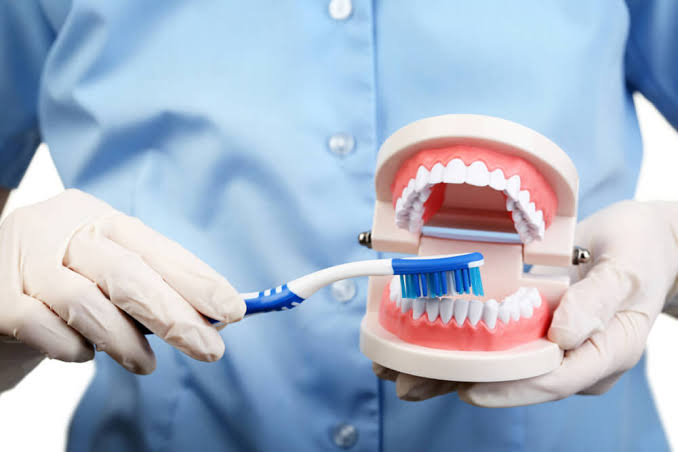
The final restoration is selected to suit the treatment plan and the patient's functional and aesthetic needs.
Once the implant has healed sufficiently and the dentist confirms that the site is ready, a suitable restoration can be fitted.
The restoration may be a crown for a single missing tooth or part of a broader treatment plan for multiple missing teeth. Its shape, fit, bite, and appearance are assessed as part of the restorative process.
Depending on your oral health and individual circumstances, dental implants may offer several advantages compared with other tooth replacement options.
An implant-supported restoration can replace a missing tooth without relying on neighbouring teeth for support in the way some traditional bridges do.
A properly planned and maintained implant restoration can help restore chewing function.
The replacement tooth can be designed to complement your surrounding teeth and smile.
An implant transfers forces to the jawbone and may help reduce the bone changes associated with tooth loss in suitable patients.
Implant-supported teeth are designed to remain in place, unlike removable dentures that patients take out.
With appropriate care and regular dental reviews, implant restorations can serve patients over the long term.
Outcomes and suitability vary. Dental implants involve surgical treatment and are not appropriate for every patient. Your dentist can explain the potential benefits, risks, alternatives, and expected costs following an examination.
Learn more about the treatment stages, healing, and care involved in dental implant treatment.
The timeline varies according to bone health, implant stability, healing, and whether additional procedures are required. Your dentist can estimate the likely duration after reviewing your case.
Local anaesthesia is commonly used during implant placement. Some discomfort, swelling, or tenderness may occur afterward. Your dentist will explain appropriate aftercare and pain management.
No. Suitability depends on factors such as gum health, available bone, general health, smoking, and other individual considerations. An examination is necessary to determine the available options.
Not everyone needs bone grafting. It may be recommended when there is insufficient bone to support the planned implant. Your dentist will assess this using a clinical examination and appropriate imaging.
Clean your teeth and implant restoration every day, use suitable interdental cleaning aids, attend routine dental check-ups, and follow your dentist's instructions. Implants also need professional monitoring.
Implant treatment can be planned for a single missing tooth or multiple missing teeth. The number and position of implants depend on the clinical situation and the proposed restoration.
Arrange a consultation to discuss your missing teeth, treatment options, and the next steps.
Enquire on WhatsAppTreatment recommendations are made after a clinical examination. This page provides general information and is not a substitute for professional dental advice.