01
Persistent Toothache
Ongoing or spontaneous tooth pain can be associated with inflammation or infection inside the tooth.
Root canal treatment, also known as RCT or endodontic treatment, is performed to treat infection or inflammation inside a tooth. The aim is to remove the affected pulp, clean and disinfect the root canal system, and seal the tooth so it can be restored.
When a tooth can be saved, root canal treatment may help preserve your natural tooth rather than removing it. Your dentist will first assess the condition of the tooth and explain the most appropriate treatment options.
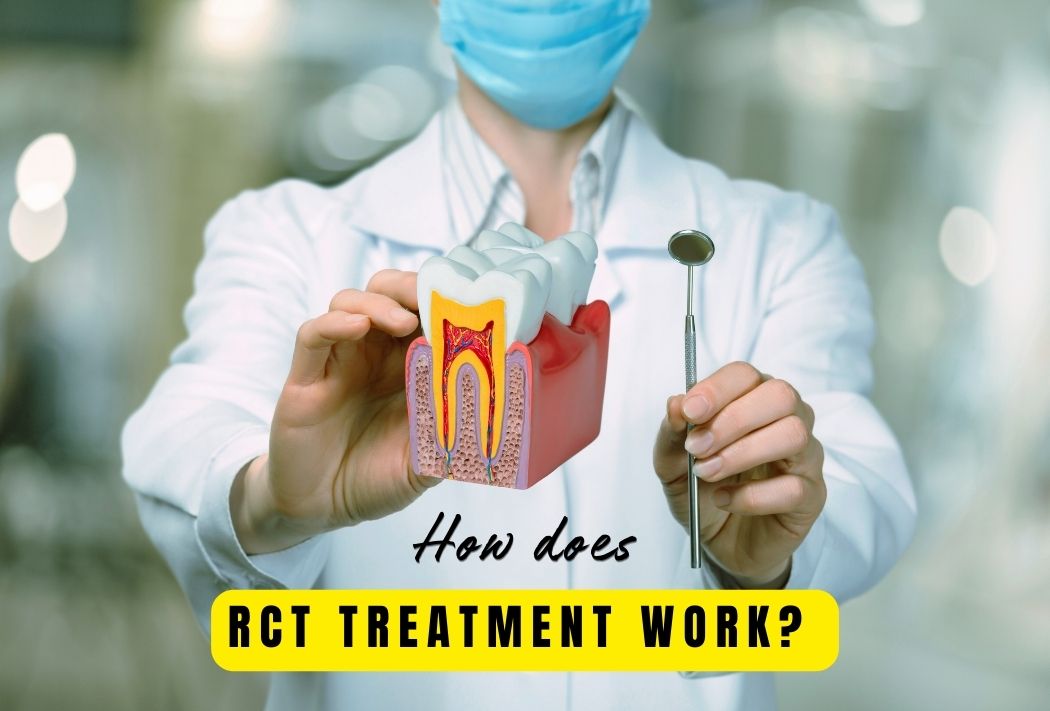
Root canal treatment focuses on cleaning and sealing the inside of a tooth to help preserve it.
Damage or infection inside a tooth can develop for several reasons. Your dentist examines the tooth, reviews your symptoms, and may take X-rays or perform other tests to determine whether root canal treatment is appropriate.
Ongoing or spontaneous tooth pain can be associated with inflammation or infection inside the tooth.
Lingering sensitivity may indicate pulp inflammation, although examination is needed to establish the cause.
Extensive decay can reach the pulp inside the tooth and may require root canal treatment.
A crack, fracture, or dental injury can damage the pulp even when the tooth still looks intact.
Gum swelling, a pimple-like bump, or drainage near a tooth may indicate infection requiring assessment.
A tooth that changes colour may have several causes, including previous trauma or pulp damage.
Before starting treatment, the dentist evaluates the affected tooth and the tissues around it. This helps determine whether the tooth is suitable for root canal treatment and what restoration may be needed afterward.
Tooth pain can have different causes. An examination helps identify the source of the problem and whether RCT, another treatment, or extraction should be considered.
Your dentist will also assess whether enough healthy tooth structure remains to restore the tooth after treatment.
Front teeth, premolars, and molars can have different numbers and shapes of root canals. Complex cases may require additional time, appointments, or referral to a root canal specialist.
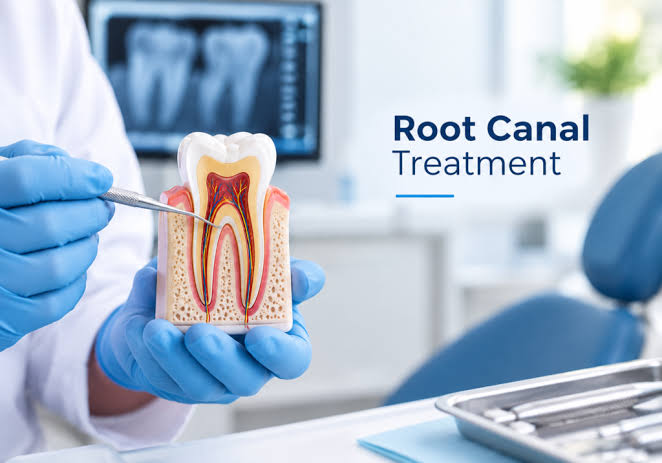
The root canal system is cleaned, disinfected, and sealed as part of endodontic treatment.
RCT is generally performed under local anaesthesia to numb the tooth and surrounding area. A protective isolation method is commonly used to keep the treatment area clean during the procedure.
The dentist then accesses the inside of the tooth, removes the affected pulp, and carefully cleans and shapes the root canals.
Each stage has a specific purpose, from controlling discomfort to sealing the cleaned canal system and protecting the treated tooth.
The affected area is numbed to help make the procedure more comfortable. Tell your dentist if you feel discomfort.
The tooth is isolated to help keep the treatment area clean and protect it from saliva contamination.
A small opening provides access to the pulp chamber and the root canals inside the tooth.
Fine instruments are used to remove affected pulp, shape the canals, and prepare them for disinfection.
Suitable irrigating solutions are used to help clean the canal system and reduce microbial contamination.
Once ready, the canals are filled with a suitable material and sealed to help prevent reinfection.
After the root canals have been treated, the tooth needs a suitable final restoration to seal the access opening and restore function.
The choice between a filling, onlay, or crown depends on how much healthy tooth structure remains, the position of the tooth, and the forces it experiences during chewing.
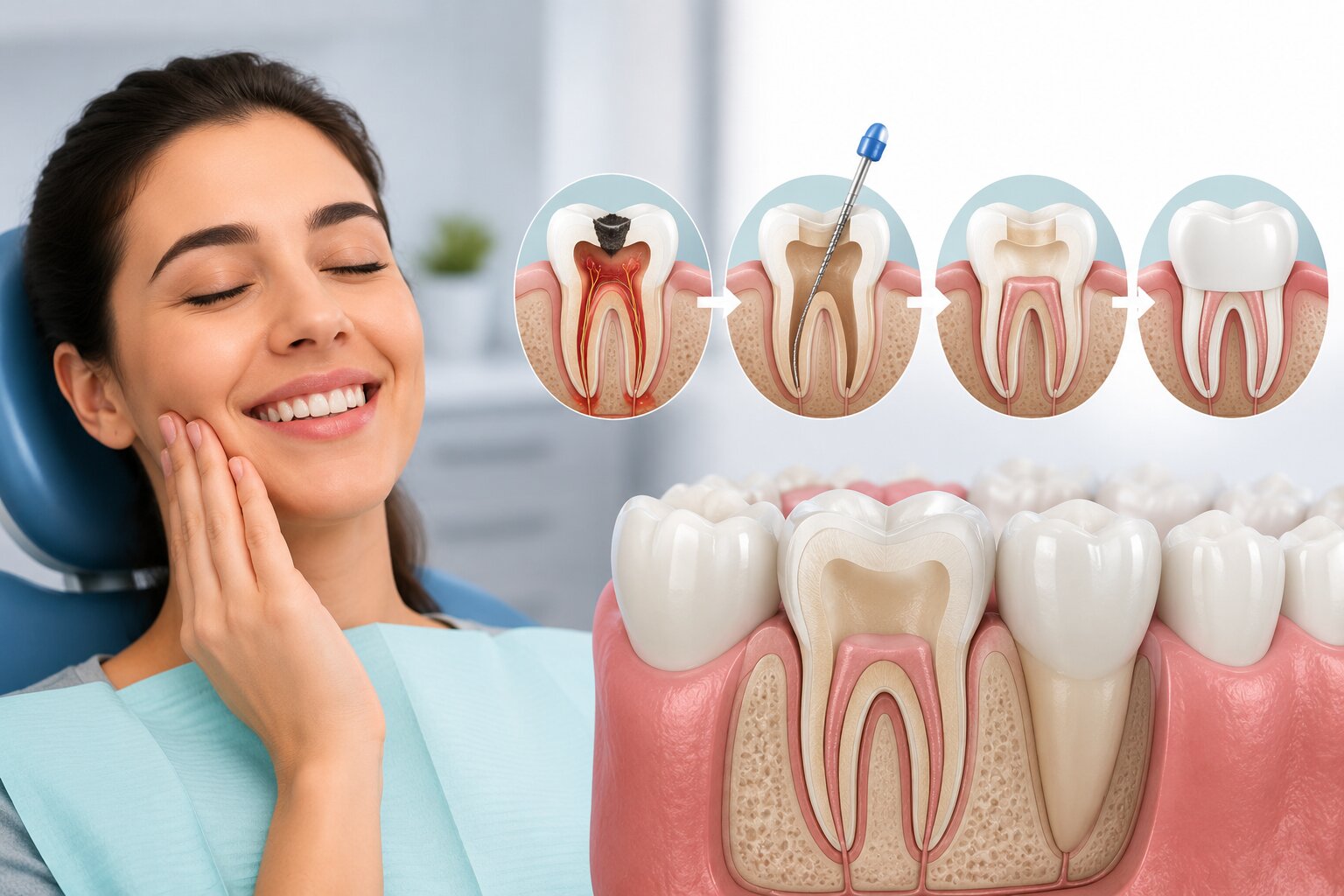
Appropriate restoration helps protect the treated tooth and restore chewing function.
When a tooth is suitable for treatment, RCT may help manage infection while preserving the natural tooth. The outcome depends on the tooth's condition, treatment complexity, and quality of the final restoration.
Treatment may allow a tooth to remain in place instead of being extracted when it can be predictably restored.
Removing affected pulp and cleaning the canals helps manage infection inside the tooth.
Treating the cause of pulpal pain can help relieve symptoms, although recovery varies by case.
A suitably restored tooth can often be used for everyday chewing after treatment and recovery.
Keeping a restorable natural tooth may avoid the need for immediate tooth replacement.
Good oral hygiene, appropriate restoration, and regular dental reviews help maintain the treated tooth.
Root canal treatment does not guarantee that a tooth will last indefinitely. Some teeth may require retreatment, surgery, or extraction if healing does not occur or the tooth cannot be restored successfully.
The tooth and surrounding tissues may feel tender for a short period after treatment. Follow your dentist's instructions and protect the tooth until the final restoration is completed.
Avoid chewing or consuming very hot foods until the local anaesthesia has worn off.
Avoid hard or sticky foods on the treated tooth, especially while a temporary filling is present.
Continue brushing and cleaning between your teeth carefully, following any specific instructions.
Follow your dentist's advice about any recommended or prescribed pain relief or medication.
Attend the recommended appointment for your permanent filling, crown, or other restoration.
Your dentist may recommend review appointments to assess symptoms and the condition of the tooth.
Find answers to common questions about root canal treatment, appointments, discomfort, and recovery.
Local anaesthesia is generally used to numb the treatment area. Many patients tolerate the procedure well, although tenderness may occur afterward. Tell your dentist if you experience discomfort during treatment.
Some root canals can be completed in one visit, while others require two or more appointments. The number depends on the tooth, infection, canal anatomy, and complexity of treatment.
Appointment length varies according to the tooth and the complexity of the procedure. Your dentist can provide an estimate after examination.
Not every tooth requires a crown. However, a crown or another protective restoration is often recommended when a tooth has lost substantial structure. Your dentist will assess what is appropriate.
Yes. Reinfection or persistent disease can occur in some cases. Appropriate canal sealing, a good final restoration, oral hygiene, and follow-up care help reduce risks but cannot eliminate them completely.
Follow the instructions provided by your dentist. Avoid chewing while your mouth is numb and be cautious with hard foods until the tooth has received its recommended final restoration.
If the tooth can be predictably treated and restored, preserving it may be a suitable option. Extraction may be necessary for some severely damaged teeth. Your dentist can explain the benefits, risks, and alternatives for your particular situation.
Contact Dr. Bansal's Dental Clinic to arrange an assessment and discuss whether root canal treatment may be suitable for your tooth.
Enquire on WhatsAppThis page is for general information and does not replace a dental examination or professional advice. Treatment recommendations and outcomes vary between patients.